Sports Injury Rehabilitation in Vignan Nagar, Bangalore back to full strength
Structured rehab for sprains, strains and ligament injuries that gets you back on the field, court or track stronger than before. Stage-based programs with proper return-to-sport testing at our Vignan Nagar clinic in Bangalore.
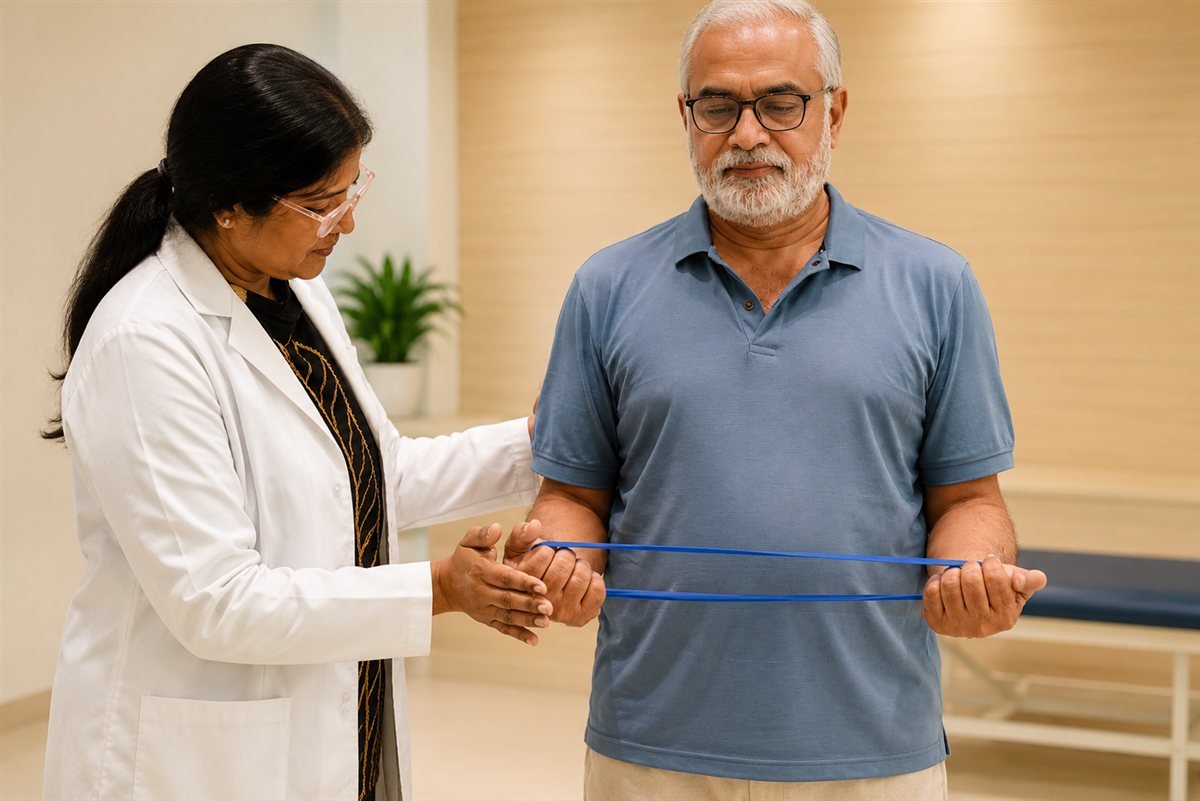
Sports injury rehabilitation at Reflect Physiotherapy in Vignan Nagar, Bengaluru is built around one goal: getting you back to your sport safely, not just getting you out of pain. We treat weekend footballers, regular runners, badminton and cricket players, and gym-goers from across East Bangalore. Most of them tell us the same story: they rested until the pain faded, went back too soon, and got injured again. That cycle is exactly what a proper rehab program breaks.
Sports injuries we treat
- Ankle sprains: the most common football and badminton injury, and the most commonly under-rehabilitated one
- Hamstring and calf strains: frequent in runners, sprinters and cricket players
- Ligament tears: knee and ankle ligament injuries, including ACL and MCL. For knee ligaments, see our dedicated knee pain and ACL rehabilitation program
- Tennis elbow and golfer’s elbow: common in racquet sports and gym training
- Runner’s knee (patellofemoral pain): pain around the kneecap that worsens with running and stairs
- Shin splints: shin pain in runners, often linked to training load and running mechanics
- Shoulder injuries: from bowling, smashing and overhead lifting
- Gym injuries: lower back strains from deadlifts, knee pain from squats, shoulder strains from pressing
Our stage-based rehab approach
Healing tissue cannot be rushed, but it can absolutely be guided. Every sports injury at Reflect moves through four clear stages, and you always know which stage you are in and what it takes to progress to the next.
Stage 1: Acute care and protection
In the first days after injury we control swelling and pain, protect the healing tissue, and keep the rest of your body moving. This is also when we assess the injury properly: grade of the sprain or strain, what is torn and what is intact, and whether you need a specialist referral or imaging. Most injuries do not.
Stage 2: Restore mobility
Once the acute phase settles, we restore full range of motion in the injured joint or muscle using guided exercises and hands-on manual therapy. Stiffness left over at this stage shows up later as compensation injuries elsewhere, so we do not skip ahead until movement is back to normal.
Stage 3: Rebuild strength
This is the longest stage and the one most players skip. The injured tissue must be loaded progressively until it is at least as strong as the other side. We use resistance training, single-leg work and balance training, and we measure progress with side-to-side strength comparisons instead of guessing.
Stage 4: Return-to-play testing
Before you go back to your sport, you complete sport-specific testing: hop tests, agility drills, change of direction, sprinting, jumping and landing mechanics. A footballer’s test looks different from a badminton player’s. You return when you pass the tests, which is how we keep re-injury rates low.
When should you see a physiotherapist for a sports injury?
Book an assessment if any of these apply:
- You heard or felt a pop at the time of injury
- Swelling appeared within a few hours of the injury
- Pain or instability persists beyond 3 to 4 days of relative rest
- You have sprained the same ankle or pulled the same muscle more than once
- You returned to sport but cannot perform at your previous level
- A niggle keeps coming back every time you increase training
Go to a hospital first if you cannot put any weight on the leg, the joint looks visibly deformed, or you suspect a fracture. Once a fracture is ruled out or treated, we take over the rehabilitation.
Frequently asked questions
A simple ankle sprain may need 3 to 6 weeks. Muscle strains usually take 4 to 8 weeks. Ligament tears can take 3 to 9 months depending on the grade. You get a realistic timeline after your first assessment, and we update it as you progress.
No. Complete rest beyond the first few days slows recovery and weakens the muscles around the injury. Controlled, guided movement starts early and heals tissue faster than rest alone.
Often yes, with modifications. A runner with a calf strain can usually keep cycling or doing upper body work. We plan training around the injury so you lose as little fitness as possible while the tissue heals.
Feeling pain free is not enough. We use strength testing, hop tests and sport-specific drills to compare your injured side with the healthy side. You return when the numbers say you are ready, not just the calendar.
Yes. Shoulder strains, lower back tweaks from deadlifts, knee pain from squats and elbow tendon pain are all common at our Vignan Nagar clinic. We also review your lifting technique to prevent a repeat.
Stop managing the pain. Fix it.
Every week of untreated back pain makes recovery slower. Book an assessment today.
Related Services
Areas We Serve
Ready to get back in the game? Book your assessment.
Book an assessment at our Vignan Nagar clinic or schedule a home visit today.